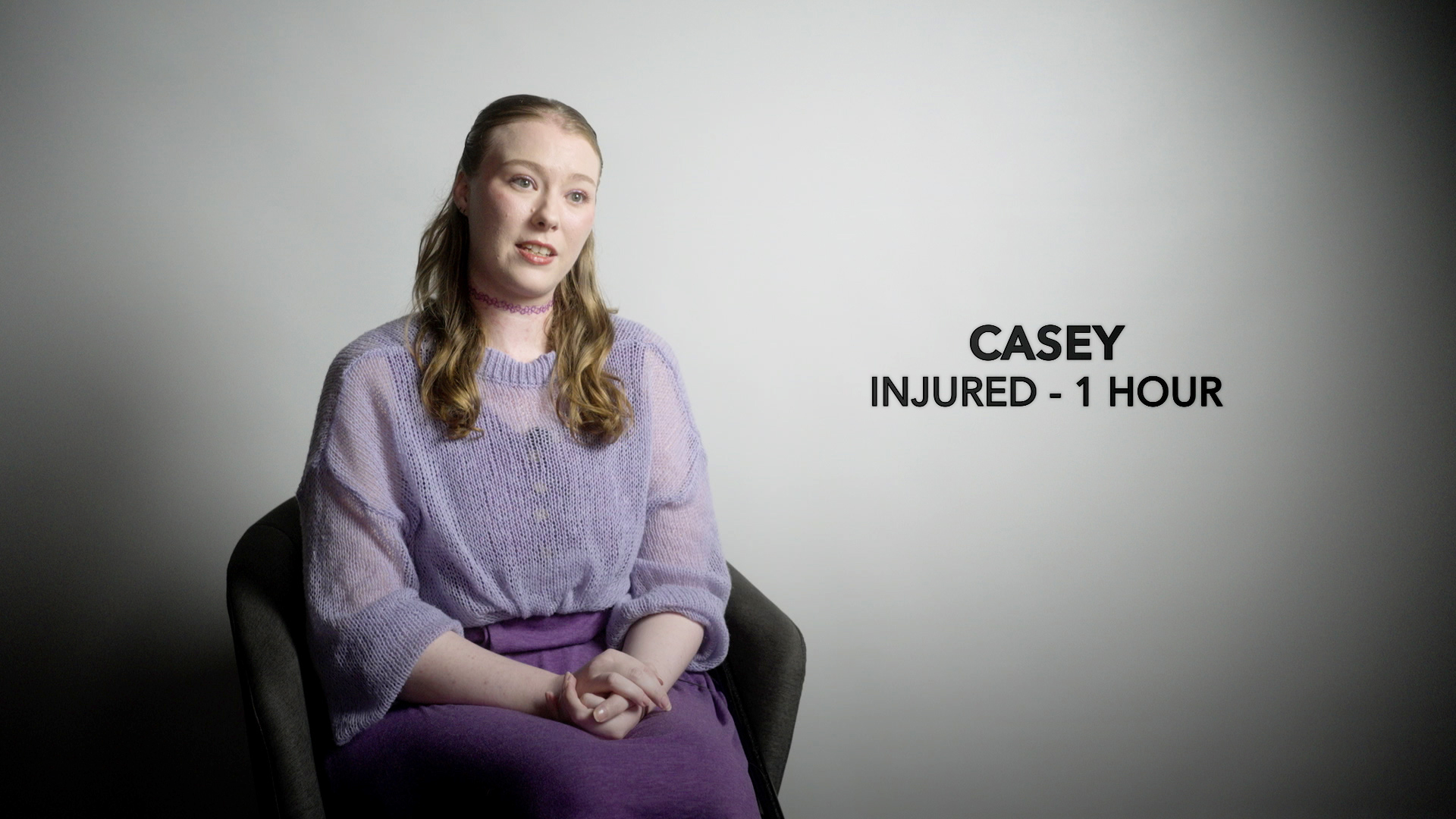
In this episode of THE+TRIBUTE, 28-year-old Casey Hodgkinson delivers a powerful account of a young life forever changed by a single Pfizer dose on September 9, 2021.
What started as compliance to protect her dream warehouse job ended in neurological catastrophe, years of medical gaslighting, media smears and bureaucratic battles—culminating in ACC cover approval on August 11, 2025.

Before the injection, Casey embodied vitality and joy.
“My health was the best that’s ever been. I was working Monday to Friday doing the job of my dreams. I had it all. I loved singing, I was singing all the time, I was enjoying life. You’d find me humming at work. I just remember feeling very content”
The jab, administered intravenously instead of intramuscularly by an incompetent vaccinator, triggered rapid onset symptoms:
“It took one vaccine for this to happen to me. After an hour I started slowly having symptoms. I had a numb tongue. My body was feeling very off. I collapsed at work. remember crawling to the car.”
From the moment her symptoms erupted — numb tongue, spasms, unbearable “ten out of ten” pain and full-body convulsions — she encountered a system primed for skepticism rather than empathy. At emergency care and subsequent visits to North Shore and Auckland hospitals, staff immediately flagged the vaccine link but reacted with reluctance and outright hostility:
“They treated me like I was insane.”
Casey describes how doctors and nurses refused to test or investigate despite visible spasms and vocal tics, as if acknowledging a possible vaccine connection was untenable. In one harrowing instance, during severe episodes where she couldn’t move, walk, or control her body, she was sent to a unit reserved for the dying:
“I remember hearing people dying around me. That was very hard.”
Isolated and in agony, she repeatedly pressed the call button for basic needs like using the toilet, only to be ignored until she had to crawl across the floor to avoid soiling herself— a stark symbol of dehumanization amid pandemic overload and fear. The dismissal escalated to invalidation when a psychologist, summoned because staff assumed her symptoms were psychosomatic, casually diagnosed her as having “TikTok hysteria.” Implying her suffering stemmed from social media trends rather than a real physiological event, reinforcing the narrative that her pain was fabricated or exaggerated.
“I was too busy working to be on TikTok like that. The only thing different is I took a new vaccine, and now I’m like this. What’s going on?”
Even attempts at treatment backfired: hospitals administered schizophrenic medications and calming sprays that worsened her condition, multiple GPs dismissed her via phone consultations under Covid restrictions. Specialists and ACC reviewers—often deciding without ever meeting her—perpetuated denial, attributing everything to stress she hadn’t experienced pre-injury. It took a compassionate GP who finally reassured her that “this is happening to you,” and advocated for proper help to break the cycle of gaslighting.
“This doctor particularly, he saved my life in a lot of ways. And I will always be grateful for him. I was shaking, I walked in and he looked at me and straightaway knew. Oh, bless him. He helped me a lot. He was able to get me the help I needed.”

This pattern of disbelief, minimization, and outright rejection not only prolonged her suffering but deepened the trauma, turning a medical crisis into a battle against a system that seemed more invested in protecting the Covid vaccine from disrepute than protecting a harmed patient—leaving Casey to question her reality and sanity as she quickly lost trust in healthcare professionals.
Media and online attacks compounded the isolation when a Givealittle fundraiser for Casey was labeled a “scam” by immunologist and Deputy Chair of the Malaghan Institute ’s trust board, Professor Graham Le Gros, in aNovember 2021 Stuff article “Covid19: Vaccine experts call for proof as Givealittle scam page stays live.”
Vaccinologist and Co-Director of the Global Vaccine Data Network, Helen Petousis-Harris, also claimed the Givealittle page Casey’s friend had set up to help her get through her loss of job and severe health problems “should not be seen as evidence that the girl’s symptoms have been caused by a vaccine.” She argued the page should be taken down as Casey should be “applying for ACC.”
Le Gros said her “symptoms and behaviour are not related to vaccines but to other behaviours and issues” that her claims do not “make medical sense.”

“They smeared my character, they smeared my name, they just saw a Givealittle page and just assumed. If you’re going to make comments — come and meet me, come see my life. Come for like a day. See what I deal with!”
Casey managed to speak to the reporter, Nathan Morton, who did not retract the story or apologise. But she found a way to forgive them:
“I did come to a point where I forgave them, their cluelessness, truly, they had no idea.”
After four gruelling years of advocacy, in August 2025, ACC finally approved her injuries: “Injection puncture wound incorrectly administered to the vascular system; Spike protein induced neuroinflammation; induced neurological autoimmunity manifesting as encephalitis with seizures; peripheral neuropathy and Guillain-Barré syndrome; Encephalitis and epilepsy.” ACC’s long-awaited decision brought immense relief.
“That’s a weight. That’s a whole weight off my back that I’ve been holding for years. Four years, give or take, of fighting so hard just for help.”

Daily life remains challenging.
“I still can’t walk properly. Brain fog. I can’t swallow properly. Just simple things like showering or walking to get a letter from the letter box. It’s very interesting having to think about the little things. Make’s you appreciate it.”
Casey’s amazing spirit endures, helped by her faith and determination. Drawing from Jesus’ teachings, she emphasizes “love and light” amid misunderstanding.
“Something that aligned me with Jesus was love and light – within love we can understand, and through light it shines the truth.”
Her final message is one of perseverance:
“Keep fighting. Keep pushing for yourself. Even when you think you’re down, stand back up and fight. My will is stronger than whatever issues I have to face. I’m going to keep going. I’m going to keep fighting.”
Casey’s testimony stands as another tribute in a growing chorus demanding accountability, informed consent, and compassion for vaccine-injured Kiwis—proving that behind official narratives real lives were damaged, but through sheer will, they have fought the system and won.
The team at The Tribute wishes Casey strength, joy and continued progress in reclaiming her young life stolen from her.
Watch Casey’s full episode now on YouTube or Spotify