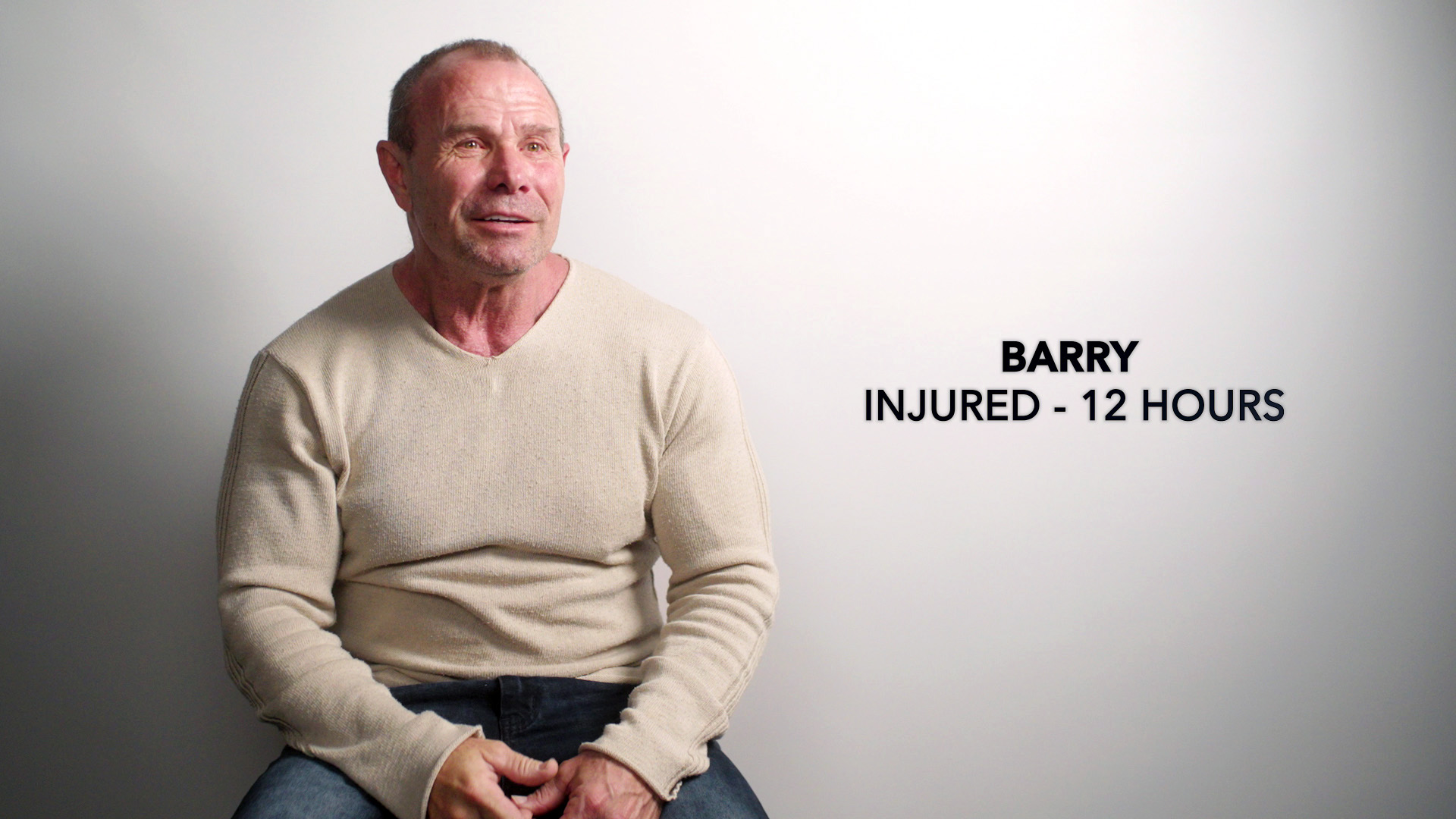
In the latest episode of The Tribute, actor, writer and screenwriter Barry Duffield, known for his role as Lugo in Spartacus, shares a deeply personal account.
What began as another career highlight—landing a dream gig overseas—took a devastating turn after he was forced to receive the COVID-19 vaccine in 2021.
Barry, born in the UK, growing up in Australian, and now living in New Zealand was a dedicated six-day-a-week gym trainer. He openly describes the coercion he faced: international contracts required vaccination to travel, and his gym job mandated vaccination.
I felt absolutely coerced. Chippy (Chris Hipkins) says, “we had a choice.” We had no choice! Not eating is not a choice. Not having a roof over your head is not a choice.

He received his second shot on September 16, 2021. The next day, his life changed. The fit, active man suddenly struggled to walk.
I’m a gym bunny, I’m a six day a week trainer. And I would lunge up and down my driveway, and it’s on an intense angle. So it was a task. After the 17th of September, I couldn’t walk up that driveway. It was hard for me to get out of a chair to help carry the shopping.
Symptoms hit hard and immediate: heart palpitations, breathlessness, skin crawling, brain fog, chest inflammation that felt “like a balloon going off underneath my diaphragm” and extreme fatigue. When he finally saw his doctor and linked the timing to his vaccination event, the doctor’s response was blunt: “I’m pro-vaccine” — end of discussion.

An ECG showed thickening of the left ventricle, suggestive of cardiomyopathy. Cardiomyopathy is disease or injury to the cardiac muscle — a serious and non-reversible condition that causes shortness of breath, decreased exercise tolerance & may lead to cardiac failure, arrhythmias and death.
His doctor trivialised the life-limiting diagnosis:
The doctor said, “so that puts to rest your conspiracy theories, Barry!” And he had a bit of a chuckle about that.

Hospitalisation followed, with a full battery of heart tests confirming the diagnosis.
Yet attempts to discuss vaccine timing or earlier myocarditis were repeatedly shut down. One specialist attributed it to “your past life catching up with you.” Duffield pushed back:
So we all live a life. And my life has been a bit raucous at times. But everything I’ve done in the last 60 years has suddenly caught up with me in 12 hours after the vaccine? I mean, how do you explain that? So I got myself a new doctor.
A new doctor ordered a spike protein antibody test (costing around $120, which Duffield notes likely deters many). His levels came back at 3,102.8 per milliliter — far exceeding the 179–300 range expected from natural COVID infection. High IgG4 antibodies were also detected, potentially leaving the immune system less responsive to infections. Recurrent illnesses followed.

So your system is going, “okay, you’ve got all this antibody in there, so I don’t need to protect you from infections.” And then I got one, after the other, after the other of infections. Like I went to the gym one day and I was in convulsions in the car.
Neurological issues emerged too: tremors starting in his little finger and thumb escalated up his arm (the injection site). A neurologist thought it was Parkinson’s and prescribed Sinemet — Levodopa, most often combined with carbidopa as Sinemet, is considered an effective treatment for Parkinson’s disease movement symptoms. It works by converting to dopamine in the brain.
Barry experienced severe reactions after eight weeks on the drug: hallucinations, intense anxiety (new to him), and a suicide attempt. He woke in ICU with no memory of the act, later learning from his wife’s account of finding him barely breathing in a cold shower, where he reportedly screamed, “Just let me die.”

The mental health unit had to show up to clear me before I could leave. And the guy said, “so what were the thoughts running through your head?” I said, “I had none. I had no thoughts of suicide, but I was taking this Sinemet.” And he said, “oh, another one.” I can honestly say I’ve never had a suicidal thought prior to that.
The Sinemet label listed suicidal thoughts, anxiety, depression, and hallucinations — warnings he says were never mentioned by the neurologist – a fault Barry believes is medical malpratice.
Both the vaccine and the Sinemet tried to kill me, just in different ways: one physically, the other psychologically.
The gaslighting, he says, has been relentless — from doctors telling him he’s got “TikTok syndrome” to friends dismissing symptoms as they play “devil’s advocate”. A compassionate nurse later privately admitted, “There are hundreds that come through the doors that are exactly like you. I’m just not allowed to say anything about it.”

Despite the physical and mental toll — ongoing tremors, anxiety attacks that strike as he drifts to sleep, headaches, crawling skin, and intrusive thoughts of stepping off a bridge — Duffield credits his wife of 28 years with saving him.
If I didn’t have my wife, if I didn’t have her support and backing, I probably wouldn’t be here talking to you now.
He sets daily goals, continues writing (including the third novel in his No Man, No Women series) and has recently written a book Coming Soon: A life at 24 Frames, about his life, work and vaccine injury, available on Amazon.

He also channels his energy into advocacy. Recently speaking at the “Safe and Effective Roadshow,” organised by NZDSOS. He begins his speech with remarks that emphasise shared vulnerability:
The only difference between you sitting out there and me on this stage is luck or fate. The government loaded the gun. They put one bullet in the chamber. It’s Russian roulette that we’re all thrown into. The only difference between you and me is just that — you’re just lucky.
He wants accountability for those who drove the mandates, including figures like Dame Jacinda Ardern and Ashley Bloomfield. Duffield’s message is clear and urgent:
Don’t let them isolate you. There are lots of other people like us.
This episode of The Tribute — a series dedicated to amplifying the voices of New Zealanders who were injured by the COVID jabs and dismissed by the system — is a powerful, unflinching testimony. It highlights not just one man’s battle with injury, medical denial, and mental health crisis, but the broader human cost of policies that left many feeling they had “no choice.”

Please comment