Author: G. Barnes

  • 3. Val’s Story – Fit Young Mum’s Battle with Heart Scarring After Pfizer Vaccine

    3. Val’s Story – Fit Young Mum’s Battle with Heart Scarring After Pfizer Vaccine

    Prior to vaccination, Val led an active, sporty lifestyle. She studied sport, played regularly, frequented the gym, and enjoyed an energetic life with her family and two-year-old daughter. As someone working in education, she faced workplace mandates requiring vaccination to maintain employment.

    “I waited as long as I could. And it got to December, and I just had no choice. I felt like I had to, if I wanted to keep an income, pay a mortgage, go to places with my child— to have a normal life.”

    Despite strong personal reluctance, she describes feeling influenced by social pressure, and the then-common labeling of non-vaccinated individuals as “selfish” and “crazy”. She also received assurances from medical professionals, including her GP, that adverse reactions were rare.

    “Before I got vaccinated, I called my GP and asked her what happens if I have a reaction. And she said, ‘We know what to do with it, so you’ll be fine’. So that was also a reason I went and got it, because she kind of gave me that reassurance that if I don’t react well, I’ll get care.”

    Sixteen hours after the injection, while doing a routine weekly shop in the supermarket bread aisle, Val experienced sudden, intense tachycardia—her heart racing uncontrollably in a way she had never felt despite her fitness level.

    “My heart just started to go boom, boom, boom, boom, boom, like, so fast.”

    She sought urgent care, first at Shorecare Urgent Care, a 24-hour urgent care clinic on the North Shore, where staff recognized the severity of her symptoms via ECG and directed her to hospital emergency. However, at the hospital, staff dismissed her symptoms, explaining it’s going to “take 19 hours” to see her, and advised her to go home.

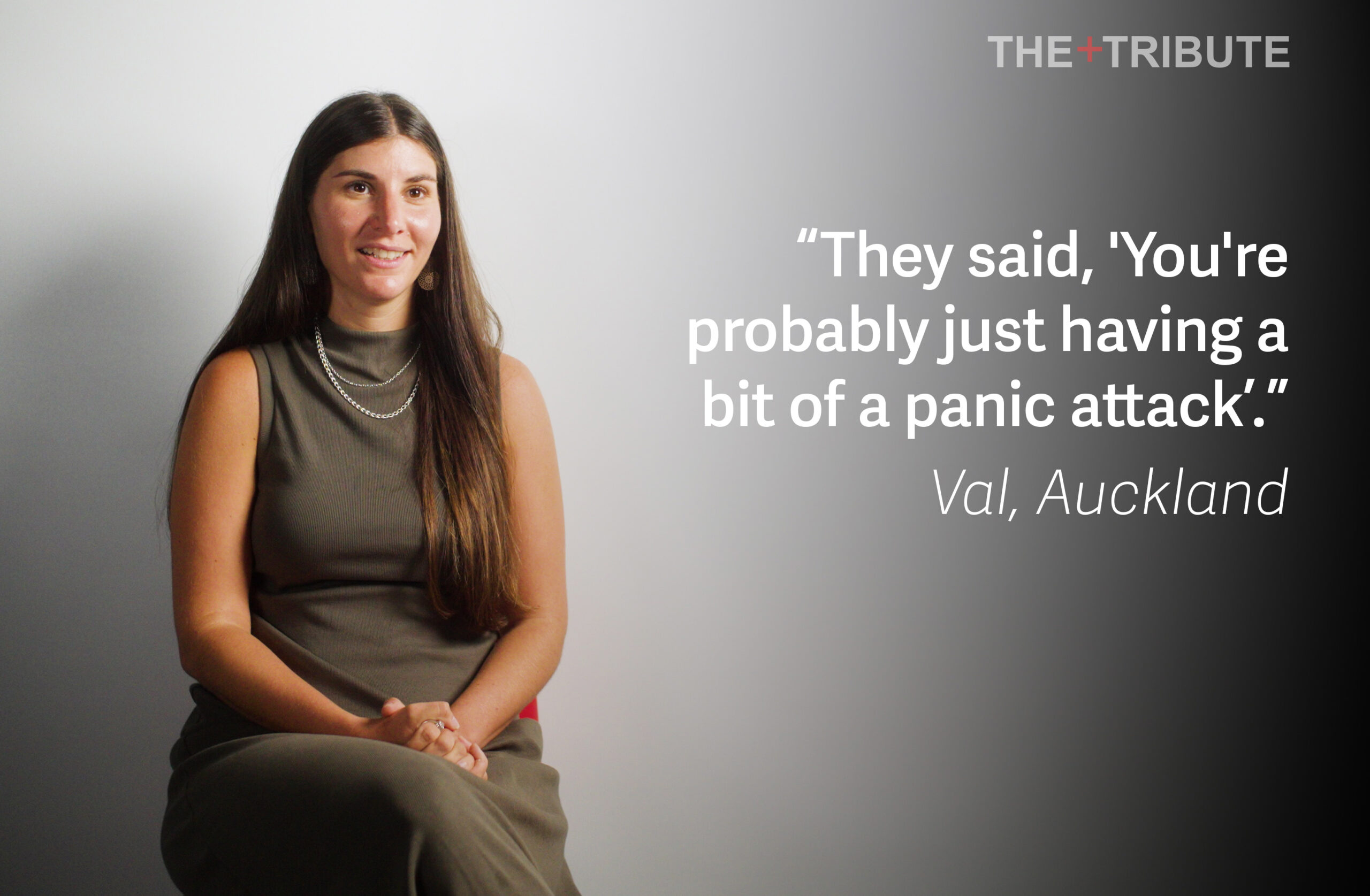
    “They said, ‘I need you to sign this form to self discharge and see how you feel in the morning—you’re probably just having a bit of a panic attack.’”

    She left feeling abandoned, terrified of going to sleep that night and not waking up.

    In the following days and weeks, Val’s symptoms escalated: lumps across her arms and chest, chronic fatigue, blurry vision, severe brain fog, confusion, and limb numbness. Chest pains persisted intensely, described as cramp-like tightening in the chest. Multiple emergency visits yielded similar dismissals—”normal reaction,” “give it a few days.” An initial cardiologist consultation also downplayed her symptoms; one cardiologist discharged her as “fine” and encouraged her to “go for a run”—which led to a rapid deterioration.

    With no formal diagnosis, Val relied on her mother’s extensive personal research, community support from the Facebook group “Kiwis with Myocarditis and Pericarditis” (which grew to 10,000 members before removal by the platform for ‘misinformation’), and guidance from New Zealand Doctors Speaking Out with Science (NZDSOS).

    She pursued care from one of the two cardiologists known in the vaccine-injured community for accepting such cases.

    “There were two main cardiologists that would take us seriously, and that was when I started to get some care. But this was probably eight months down the track now.”

    An initial MRI was inconclusive, partly due to her anxiety over the contrast dye injection. A follow-up MRI a year later revealed scarring consistent with prior myocarditis, though they did not document this in her health record.

    “It was reassuring to know, okay, I’m not crazy. I did have myocarditis.”

    Her experience is an expected reaction, reflected in a nationwide 2023 New Zealand study—the largest vaccine safety assessment ever conducted in the country. Researchers from Health New Zealand examined over 4 million vaccinated individuals aged 5 and older (essentially almost everyone who received a COVID-19 vaccine) and found a clear increased risk of myocarditis and pericarditis (inflammation of the heart muscle or its surrounding sac) linked to the Pfizer vaccine.

    They identified the risk of vaccine induced myocarditis or pericarditis was especially high in younger people: for kids and teens aged 5–19, the second dose raised the chance of this heart inflammation by about 25 times compared to normal background rates, leading to roughly 5 extra cases for every 100,000 young people vaccinated with a second shot. In the 20–39 age group, the risk was about 3.5 times higher, after the first dose and 6.6 times higher after the second.*

    Val pursued extensive self-managed recovery: rest (avoiding exercise as advised by online sources), supplements, saunas, hyperbaric oxygen therapy and other natural approaches. She spent significant personal funds alongside support from her health insurance that covered vaccine-related claims without question.

    Her ordeal extended to social and professional exclusion under the government’s Protection Framework’s vaccine pass rules. She nearly lost her seven-year job—mandates ended just two days before her deadline to be fired—but she still faced barriers accessing everyday services.

    “I missed my friend’s wedding, I wasn’t allowed inside a medical centre—I’m just standing outside like an idiot because I didn’t have a pass. I think that was really challenging because—socially, you were this stranded loner; physically, your body is ruined; and mentally, you’re just drained.”

    Another smaller New Zealand survey in 2024, of individuals diagnosed with myocarditis and/or pericarditis at least 90 days post-Comirnaty vaccination found that over half of participants reported ongoing impacts on their health, mental health, physical functioning and daily activities.

    Family and close friends provided crucial support, particularly her mother’s research which proved lifesaving in countering initial medical dismissals, specifically the advice to not exercise.

    “I don’t think I’d be here if it wasn’t for my Mum. She educated me on all of it. I would have just kept running. She taught me a lot, to question more than I ever would have.”

    Three years on, Val reports gradual improvement. She recently completed her first run in years, played touch rugby and plans to join a netball team. Occasional chest pains remain but they are now less severe and frequent. As a now-solo parent, fear of recurrence and concern for her daughter’s future remain significant.

    “The hardest thing of this whole journey is the fear. Will I wake up? Will this happen again? And what is actually in my body? But I think if I didn’t have that little human that looks up to me, I would probably have given up.”

    She expresses ongoing anger at the coercive environment and what she views as widespread naivety during the rollout, while noting many others share similar regrets over feeling forced to vaccinate.

    “I’ve come to peace with my choice to get vaccinated. I just need to move forward or I’m just going to stew forever about my decision.”

    She is now focusing on forward momentum rather than perpetual resentment, while being determined to keep telling her story.

    “Every interaction I’ve ever had with a human, I tell them my story because I think if I don’t tell them my story, how are they going to know this happened? It’s my job to educate.”

    She credits community groups and advocates for her survival and recovery support.

    THE+TRIBUTE continues to platform these personal accounts from New Zealanders affected by COVID-19 vaccine injuries, highlighting experiences of harm, initial dismissal by parts of the health system and paths to recovery and advocacy.

    Watch Episode 3: Val’s Story here

    * Muireann Walton, Vadim Pletzer, Thomas Teunissen, Thomas Lumley, Timothy Hanlon, “Adverse Events Following the BNT162b2 mRNA COVID‐19 Vaccine (Pfizer‐BioNTech) in Aotearoa New Zealand”, Drug Safety (2023) 46:867–879
  • 2. Brent’s Story – Auckland Father’s Experience of Pericarditis After Covid-19 Vaccination

    2. Brent’s Story – Auckland Father’s Experience of Pericarditis After Covid-19 Vaccination

    Initially trusting of the medical system and pharmaceutical companies, he says he became increasingly uneasy with what he perceived as a fear-based narrative and limited public discussion of potential risks. Following two wider family members’ cancer diagnoses, Brent says unspoken expectations within his family intensified. On 5 September 2021 he received his first Pfizer dose. Within five days, he experienced severe pain:

    “I started getting a big knot in my back, which travelled up, to the point where I was in extreme pain. And then it came into my chest.”

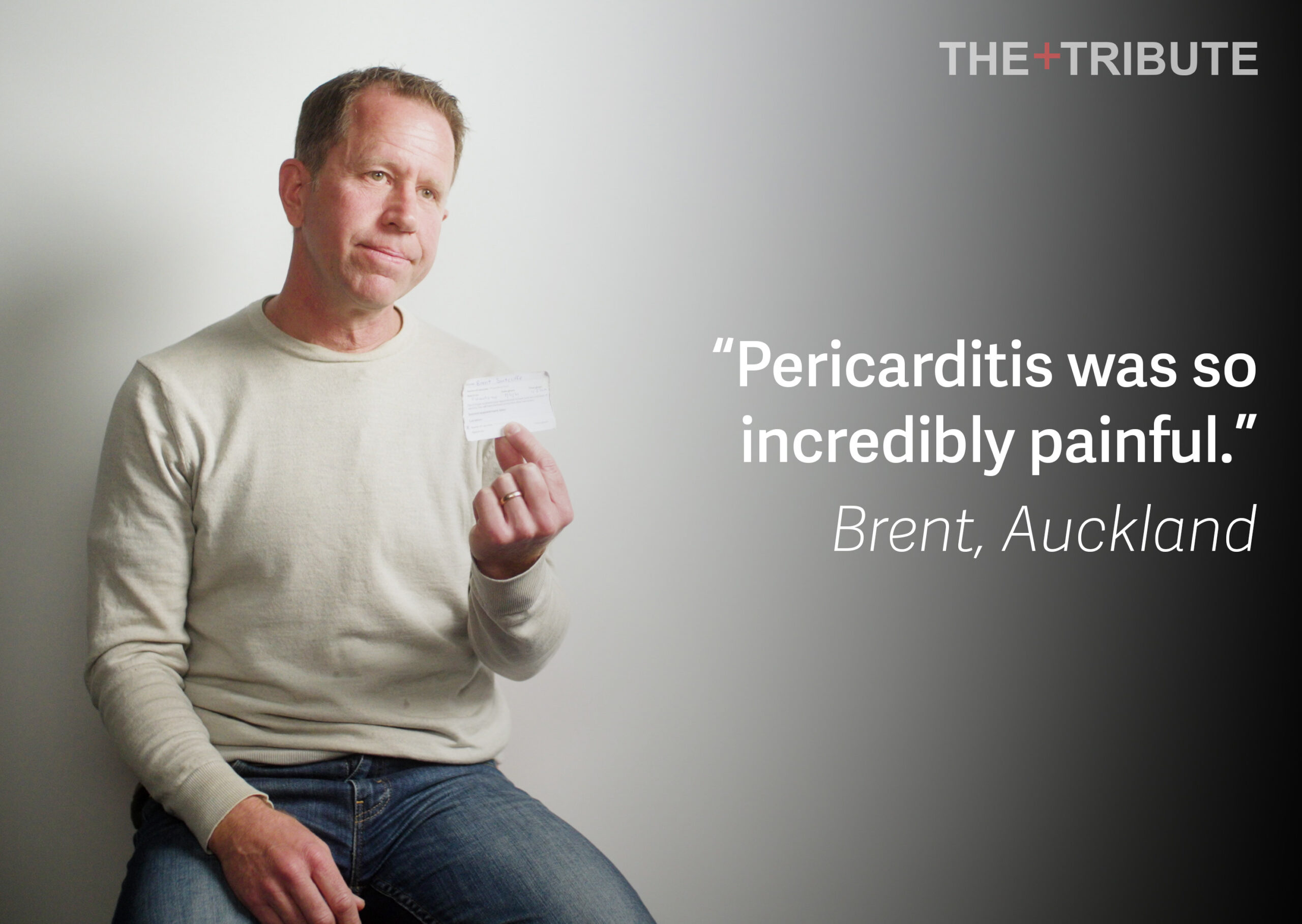
    He drove himself to hospital in the early hours, telling staff the vaccine was the only recent change in his life. Although he says his concerns were initially dismissed, tests later confirmed pericarditis – inflammation of the sac surrounding the heart. Brent, who has previously suffered multiple broken bones and gout attacks, describes the pain as “so incredibly painful” and worse than any injury he had experienced.

    After 24 hours of monitoring, Brent says he was discharged with advice to proceed with his second dose because “COVID is way worse”. He recalls feeling stunned by that recommendation:

    “I was in absolute disbelief… If that’s the calibre of our doctors, like, seriously, we’re in big, big trouble.”

    Brent was initially granted a temporary medical exemption from Covid-19 vaccination mandates and the then–Covid-19 Protection Framework settings, which had restricted access to many services and venues for the unvaccinated. However, he says a subsequent exemption application was declined and he was advised he should still receive a second dose.

    Brent discusses how Sir Ashley Bloomfield personally denied his exemption from a second dose.

    Official data from Health New Zealand show that very few New Zealanders who reported serious adverse reactions were granted medical exemptions to mandated vaccination. Of those who applied on the basis of myocarditis or pericarditis after a first dose (119), only 43 received exemptions. Similar patterns applied to applications based on severe anaphylaxis, other significant adverse reactions, and pre-existing inflammatory cardiac conditions.

    Brent’s family was further affected when his 15‑year‑old son developed similar symptoms several weeks later.

    “One night, my son was sitting doing his homework. He goes, ‘I’ve got this real sore back.’”

    His son was admitted to hospital and then left largely bedridden for three to four months, with even walking to the letterbox leaving him exhausted. He missed substantial schooling, particularly in maths and physics, making his ambition of becoming an engineer significantly harder to pursue.

    Another son was excluded from his football team because of his unvaccinated status.

    With limited support offered through conventional channels, Brent says the family turned to a range of alternative therapies at considerable personal cost:

    “We spent a lot of money doing a lot of the more alternative treatments. It was a tough two years, it definitely left us quite financially stretched. Now I seem to be okay. But there are still a whole heap of unknowns.”

    Brent says he has lost friends whom he believes died as a result of vaccination, and he keeps his vaccine card as a stark reminder. The overall experience, he says, has deeply shaken his trust in pharmaceutical companies, Medsafe, and political and medical leadership, particularly around what he describes as inadequate informed consent about risks such as myocarditis and pericarditis.

    “There was grief around realising that I couldn’t trust people that I thought I could. Yeah, real grief and anger, and fear actually. The whole thing has made me incredibly cynical, untrusting and angry.”

    He also describes how his faith has been central in coming to terms with what has happened and in his decision to decline government compensation:

    “I’m a man of faith as well, so that really helped massively.”

     Watch Brent’s full 20-minute episode now on YouTube or Spotify

  • 1. Ange’s Story – Micro Clots & Costochondritis after Covid Vaccination

    1. Ange’s Story – Micro Clots & Costochondritis after Covid Vaccination

    Once known for her boundless energy—rising at 5 a.m. for runs up Mount Maunganui, teaching yoga classes, and thriving in CrossFit—Ange’s life changed dramatically after receiving a single Pfizer mRNA injection in 2021. As a frontline health worker in a rest home, Ange felt she had no choice but to get vaccinated to keep her job and support her family. 

    “It happened straight away for me. I started to get stabbing pain on the left side of my chest. My daughter rushed me to the emergency department, and the doctor there said to me that I was the fourth person that day that had had this sort of reaction. They don’t know what’s going to happen to me.”

    Sent home with a ‘wait and see’ approach, her symptoms worsened: relentless chest tightness, rashes, metallic taste in her mouth, extreme fatigue, elevated D-dimer levels revealing evidence of blood clotting, and ongoing inflammation.

    Specialists, including immunologist Dr. Rohan Ameratunga, diagnosed her with vaccine-induced long COVID and costochondritis which is inflammation of the cartilage connecting the ribs to the breastbone. “I still have that too to this day,” Ange explains.

    Further testing by researcher Dr. Anna Brooks revealed micro-clots in her blood -findings linked directly to the vaccine reaction, as Ange had never had COVID-19. 

    As a qualified health-worker, Ange explains:

    “These micro clots are microscopic and they pass through the vein and clog them up for like a second or two, but it’s not enough to have a full on stroke. They’re too small, but over time, if you’re not keeping that blood thin, like taking blood thinners, the blood will kind of stick together, and you have a mini stroke or a mini heart attack.” 

    Ange endured over 100 hospital visits, profound medical gaslighting, placed on mental health drugs and eventually ended up in a psyche facility.  

    “The doctor would be like, ‘it’s all in your head’. There was one time I was on the floor for five hours in the emergency department, holding my heart like crying and begging for them to help me. The doctors were just walking past me.”

    She lost everything: her job, home, relationships, friends and the vibrant spirit that defined her. 

    “Both my daughters have got trauma from it. They saw me as an on the go—super mum, to just in bed all day with the curtain shut. And my partner at the time had to carry me to the shower. I had to be propped up in the bed with pillows everywhere so that I could breathe properly.”

    After a grueling three-year battle, Ange eventually won limited help from the Accident Compensation Corporation (ACC) for treatment costs and aids like a wheelchair—though she emphasises it’s far from adequate, arriving late as she begins to regain some mobility. During her claim, she explains fraudulent attempts by ACC specialists to manipulate her medical records.

    According to a proactive release from ACC of Covid-19 vaccine related treatment injury claims, received by The Tribute team last year, between 18 February 2021 and 21 July 2025, ACC had received 4,442 claims for injuries relating to the Covid vaccination. During this time they have paid out $14,948,677 on 1,769 confirmed treatment injuries, defined as an injury caused as a result of receiving a Covid-19 vaccination from a registered health professional. 

    Now living day-to-day on a sickness benefit, Ange speaks out to raise awareness and support others who suffer in silence, as she calls for a proper investigation and compensation for the injured who were coerced into vaccination during the mandates.

    “We were told we’re gonna lose our jobs if we don’t— your kids, your grandmother are going to die. Like all the rhetoric that was coming in from everywhere. I remember standing in the chemist and ‘get your vaccine, get your vaccine.’ Then in the supermarket, ‘get your vaccine,’ like it was everywhere.”

    Ange’s courage shines through:

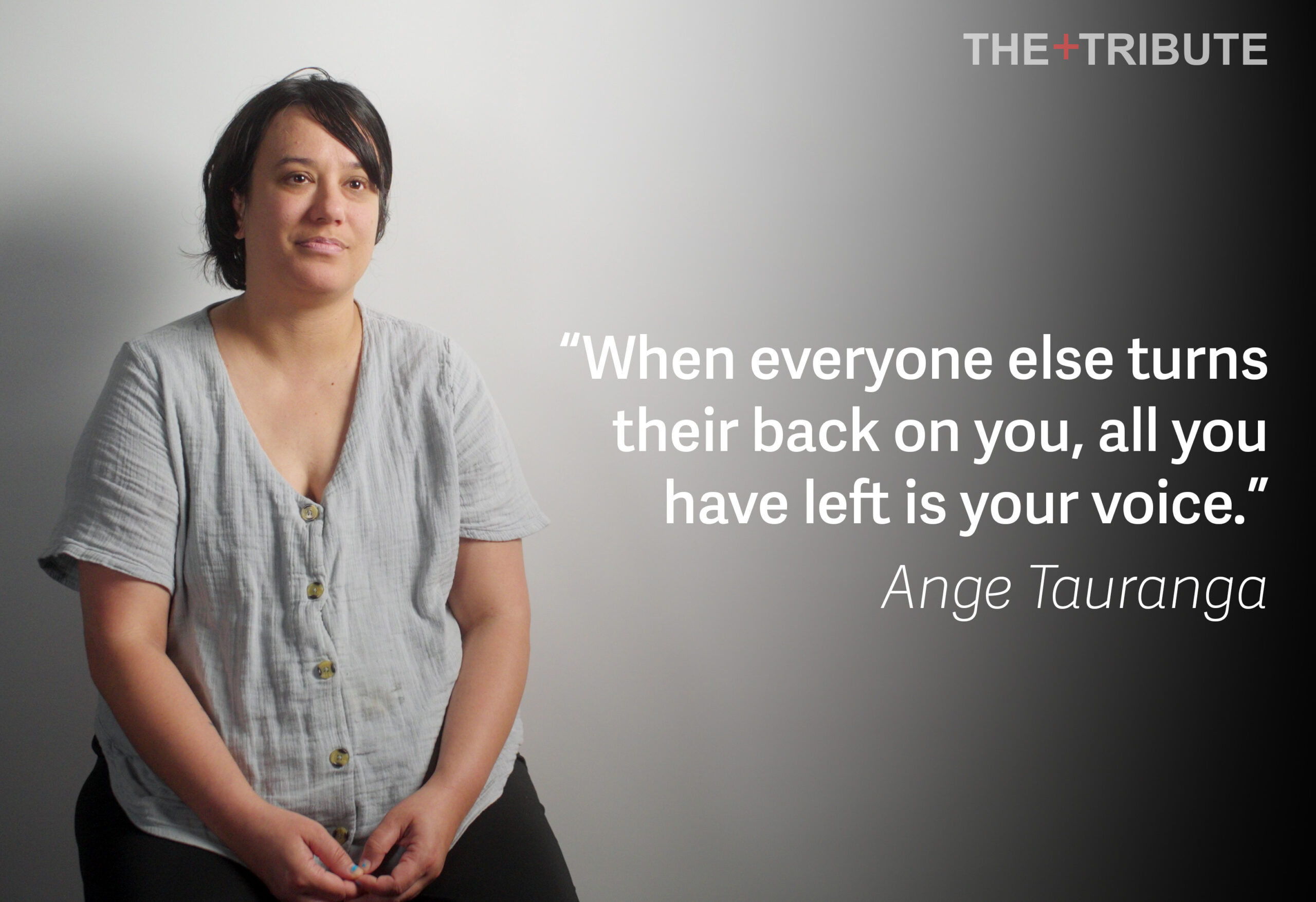
    “It’s really hard when you get to this point and you realize that there isn’t any help out there and no one’s coming to save you. No one’s going to fix this. And all you can do is just keep talking and keep speaking up and telling your story.”

    Her experience is similar to many thousands of New Zealanders. Official figures from Medsafe’s Suspected Medicine Adverse Reaction Search (SMARS) database, drawn from the national pharmacovigilance system records over 223,000 various symptoms reported by individuals, ranging from ‘Influenza Like Illness’ (over 8500), to ‘Chest Pain’ (over 1,100), to ‘Stroke’ (over 240) following vaccination with the Comirnaty vaccine.

    SMARS is a voluntary reporting system of suspected drug adverse reactions set up by the Ministry of Health to meet the growing public demand for transparent information about medicines. At least 20,000 of these reports are classified as serious injury—life threatening and requiring hospitalisation. 

    “I was born in America, and I love New Zealand, but this is something I’ve never seen and never would have thought it would happen here.”

    Unfortunately, Ange has recently been admitted to hospital with further complications arising from her vaccination event. The team at The Tribute wish Ange a smooth recovery.

     Watch Ange’s full 20-minute episode now on YouTube, Spotify, X or Facebook